


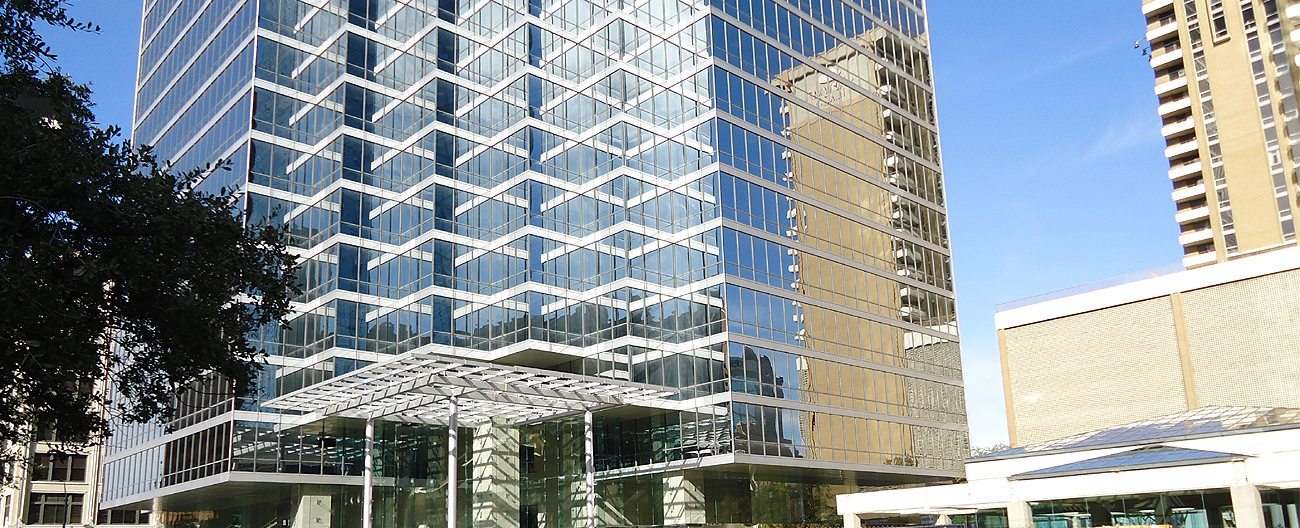
click to enlarge)

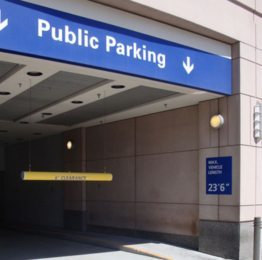
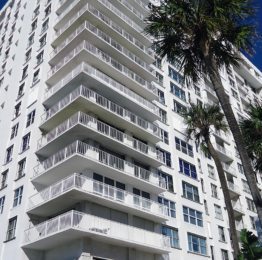
14 buildings push up through the 11-acre, 7000 space, 6-level
parking deck.
(click to enlarge)

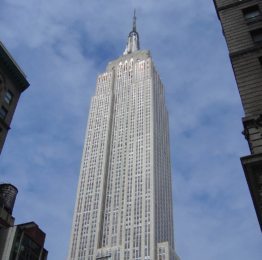
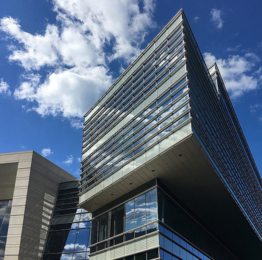
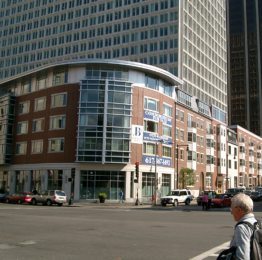
Any one of these buildings would be a normal
scope of work project for any design firm, GC, manufacturer or
subcontractor.
(click to enlarge)

Perimeter expansion joints between the parking
deck roof and each building intersect with mid-span structural joints at
every building corner. The top deck is a hot-rubberized asphalt-waterproofed
split-slab. Continuity of seal through changes in plane and direction,
from deck-to-deck to deck-to-wall was a fundamental performance criteria.
(click to enlarge)

Field measurements taken by contractors are translated into
shop drawings at EMSEAL for factory-fabrication of transition pieces.
(click to enlarge)

Factory-fabricated crosses, tees, upturns, and curbs in metal
components of MIGUTAN ready to ship from EMSEAL plant.
(click to enlarge)

Rubber sealing components are also factory-fabricated for
crosses, tees, upturns, and curbs. All welds are reinforced with
Santoprene thermo-plastic rubber sheet for durability.
(click to enlarge)

Sliding components of the MIGUTAN mounting
legs are staggered and slipped over adjoining sections to ensure positive
alignment.
(click to enlarge)

EMSEAL's unique abilities in transitioning
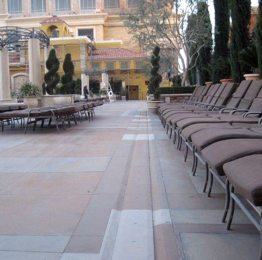
technologies are illustrated in this transition from a 4-inch joint at a
building perimeter to the 2" joint in the sidewalk. The transitions
from the MIGUTAN FP155 to the smaller FP110 was factory-fabricated and is
warranted as watertight...
(click to enlarge)

...as are transitions between the different
systems of MIGUTAN in the split-slabs and THERMAFLEX in the solid slabs when
designed and installed according to EMSEAL's details.
(click to enlarge)

MIGUTAN side sheets are tied in to hot rubberized asphalt
waterproofing membrane. This ensures complete watertight integration of the
joint system in a static tie-in to the deck waterproofing system.
(click to enlarge)

Accurate field measurements translated into
factory-fabricated transitions allowed for accommodation of slipped and
misaligned concrete forms saving time and money in concrete rework. |
|
26,000
ft--8,666 yards--nearly 5 miles of EMSEAL Expansion Joint Knit Together Atlantic
Station--Atlanta's Mega, Mixed-Use Success Story
An Instant
City-within-a-City
Atlantic Station, the $2 billion live-work-play development in
Midtown Atlanta, is a remarkable achievement. In less then 5 years, this
brand new “city-within-a-city” has suddenly emerged from the 138 acres
of contaminated brownfields left behind by a hundred-year-old steel mill.
Designed to
provide homes for 10,000 people, as well as Class A office space and
employment for 30,000, along with shopping and entertainment for
millions more, Atlantic Station is the largest and most complex private
construction project in
North America.
Bustling with
pedestrian traffic on its wide boulevards and crowds of people in the
sidewalk cafes and expansive parks, this new walkable and bikeable city
center stands in stark contrast to the urban sprawl of the rest of Atlanta,
the least dense U.S. metropolitan area where 190,000 acres of forest were
cleared from 1988 to 1998 to make way for suburban development and where
residents drive an average of 35 miles each day, more than the inhabitants
of any other city in the nation.
Biggest and Fastest
Mega Mixed-Use Project
Such
large-scale urban redevelopment projects are known as “Mega Projects,” and
there has not been a more ambitious endeavor than Atlantic Station. The
transformation of the site, from industrial brownfield to model city center,
needed to occur virtually overnight, because people would not want to live,
work and play in the shadows of a still-contaminated industrial facility.
As
Susan S. Fainstein, director of the urban planning program at Columbia
University recently told the New York Times, “Given these kinds of sites,
like old steel mills, you can't develop them incrementally. You need a whole
new address. It isn't just a matter of momentum; you have to create a change
in perception.”
And
that is what Jacoby Development did: re-branded this address, from Atlantic
Steel to Atlantic Station, through a single, comprehensive construction
project, culminating in the October 2005 official opening. As a marketing
strategy, this comprehensive re-branding made perfect sense, but as a
construction project, the enormous scale and complexity of the effort
presented an almost impossible challenge.
Expansion Joint
Planning Exemplifies Collaborative Approach
How
did they pull it off? Jacoby Development, as well as the architects,
engineers and general contractor, Vratsinas Construction Company (VCC),
employed a collaborative approach from the initial planning, down to the
details. This approach can be seen by looking at one slice of the project;
the expansion joint systems, which are critical components that too often
receive insufficient attention during the planning process.
Expansion joints typically represent only a fraction of one percent of the
overall construction budget, but inadequate joint systems quickly fail,
enabling water egress, which causes a large percentage of an owner’s
maintenance and repair problems. Replacement of failed expansion joints is
a costly, time-consuming and disruptive process. Jacoby Development
recognized early in the planning process that the design and installation of
high quality expansion joints was worth the investment. In this case, the
developer is the property owner, and therefore it has a large stake in
ensuring watertightness.
The
developer, architects and engineers sought an expansion joint provider that
had an extensive line of reliable products and a track record of
successfully completing large-scale projects. But equally important, they
sought a vendor who would provide leadership in its area of expertise and
facilitate collaboration during all phases of design and construction.
EMSEAL Joint Systems LTD, a leading manufacturer of premium sealants,
expansion joints and gasket products of Westborough, Mass., met the
criteria. With its high-quality, innovative and durable materials, as well
as its highly collaborative approach: “For projects large and small, we work
with the architecture/engineering team, the general contractor and the
various subcontractors to detail, construct, fabricate and install
three-dimensional solutions,” explains Lester Hensley, EMSEAL president and
CEO. “We use design tools to ensure that all players fully visualize the
expansion joint system not only in cross-section, but in 3D at those
critical junctures where the joint system changes in plane and direction and
where dissimilar joint materials meet.”
At
Atlantic Station, this systemic, three-dimensional approach was particularly
important, given the wide diversity of structures, substrates and surfaces,
as well as the variety of functional requirements. The thousands of yards
of expansion joints quite literally tie the entire complex together, from
roads, sidewalks, bike paths, parking facilities and landscapings, to the
exteriors and interiors of a wide variety of residential, retail and office
buildings, including floors, walls and roofing systems.
Think, Design, Detail, Specify, Construct, Fabricate and Install in 3-D
The
process began at design with the visualization by the A/E team and the joint
manufacturer of expansion joint locations, layout and impact on the adjacent
materials and spaces.
This
visualization was aided by the use of isometric line sketches of joint
layouts, which revealed conditions that could be designed-out, simplified or
for which details must be developed.
The
A/E team then supplemented the usual cross-sections with axonometric details
of conditions involving changes in direction and junctions between
dissimilar materials. The expansion joint manufacturer furnished
axonometric CAD
details showing their materials adaptation to these conditions.
The final isometric layouts and all cross-section and axonometric details
then become part of the bid documents and working drawings.
“On
any project, we encourage the inclusion of expansion joints on all drawings,
including structural, architectural, mechanical and landscape drawings,”
said Hensley. “In the specifications, we suggest a specific reference for
the responsibility of all trades to the appropriate treatment of their work
at expansion joints.”
The
isometric drawings provides a language for communication, and they
established a written record that helps to ensure common understandings
during all phases of the design and construction process. Concrete
contractors, for instance, know the tolerances required of substrates, and
interior subcontractors understood the effect the joints had on placement of
mechanical or plumbing fixtures.
(For
more on Collaborative 3-D Design at emseal.com click this link).
Installation Process
Proactive
planning, documenting and communicating made the installation process more
manageable, but it was still an enormous challenge due to the scale of the
project and the very compressed timeframe driven by the fixed completion
date of October 2005.
The
job was particularly challenging for the expansion joint installation
subcontractors, because they are responsible for one of the last pieces of
the puzzle, dependent on the timing and workmanship of the subcontractors
that come before them. As the project completion date drew near, the
situation intensified with many areas of construction at different phases of
completion, and many subcontractors working extra hours to catch up with the
schedule.
“We
were able to overcome the enormous challenges of this project by working
very closely with the expansion joint manufacturer,” says Naren Patel of
Alpha Insulation & Waterproofing Company, which installed more than two
miles of EMSEAL’s MIGUTAN and THERMAFLEX exterior expansion joints. “Even
with hundreds of requests for custom pieces, EMSEAL was able to provide a
continuous supply of parts within a couple weeks, and even custom work never
took more than four weeks.”
Development Success,
Expansion Joint Success
Despite all the challenges, Atlantic Station has met or exceeded all
expectations. The large office tower is almost completely occupied, the
IKEA store is a hit, and TWELVE Atlantic Station is already one of only 15
U.S.
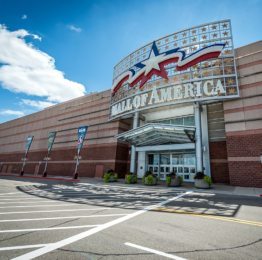
hotels to make Condé Nast Traveler’s “Hot List.” The 11-acre, 7000-car
parking garage (the country’s second largest, after the Mall of America in
Bloomington, Minn.) experiences heavy traffic – without a single reported
leak or failure in the expansion joints.
“With
a project of this size, we would expect a large number of callbacks,” says
Patel. “But because we used the highest quality expansion joint materials
and because we were careful to install the systems properly, there have been
no problems with any of the joints. The systems still look shiny and new a
year after installation, and I have no doubt that they will continue to
provide trouble-free performance for many years.”
|
(click to
enlarge)
 |
(click to
enlarge)
 |
| At the end of the day,
26,000 feet of
MIGUTAN,
THERMAFLEX,
COLORSEAL, and
MIGUTRANS expansion joints by EMSEAL integrate with the
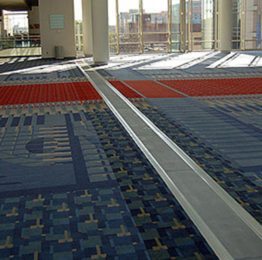
buildings and slip into the shadows. |
<For a printable
.pdf of this page, click here> |